Pakistan’s Asia Cup clash with India turned into a storm of disrespect, controversy, and tough questions for cricket
16 September, 2025
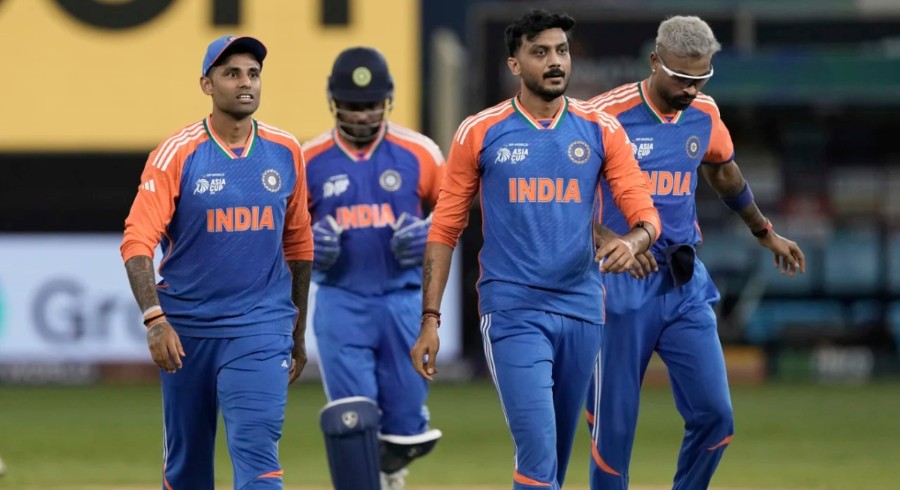 PHOTO: AP
“These Indians are showing too much attitude, why should we keep standing there to shake hands?”
When Pakistani cricketers were saying this to each other on the field, the team management asked them to stay put. The players became irritated but did not disobey. Later, when Mike Hesson and Salman Ali Agha went toward the Indian dressing room, a member of their support staff shut the door in their faces as if an angry neighbor was slamming it.
During the prize distribution ceremony, the Pakistani captain did not attend in protest. For individual awards, PCB Director International Usman Wahla and team manager Naveed Akram Cheema told Shaheen Afridi to go. He was given the award for hitting the most sixes. Considering the Indian behavior an insult, the Pakistani players decided that from now on, they would neither give interviews to Indian presenters nor go to receive awards.
Despite such a major incident, the PCB took quite some time to respond. When Chairman Mohsin Naqvi asked for details, he did not get a satisfactory reply. He immediately instructed a letter to be sent to the ICC demanding that referee Andy Pycroft be removed from the Asia Cup. Later, due to sluggishness, Usman Wahla was suspended. It is still unclear whether this suspension is permanent or just for show, like the temporary suspension of a police SHO.
In this whole affair, India’s role was extremely negative. The Indian government, under heavy criticism for losing the war with Pakistan and the destruction of six aircraft, tried to cover its failures by hiding behind cricket. See the mindset of these so-called global champions of hatred: they celebrate victories in sports with dancing and bhangra, yet do not question their government for losing a war or for constantly telling lies.
This matter doesn’t seem to be ending anytime soon. PCB has decided that if Pycroft is not removed, Pakistan will withdraw from the remaining Asia Cup matches. A match referee’s job is to enforce discipline, often punishing players for mistakes. Now that he himself erred, he too should face punishment. What right did Pycroft have to tell Salman Ali Agha not to shake hands with Suryakumar Yadav? Perhaps he was instructed, but as a referee, his responsibility was to ensure that cricket traditions were upheld — instead, he himself became a party. Maybe it was for an IPL job offer, or some other reason.
Even after the match, when Indian players refused to shake hands, the referee stayed a silent spectator. Pakistan now has no choice but to take a firm stand. However, since ICC’s chairman is Jay Shah, can one expect him to take action against a referee facilitating his own country’s interests? Sports are supposed to bring nations closer, but the current Indian government doesn’t want that — instead, it keeps sowing seeds of hatred.
In press conferences, when Mohsin Naqvi and Salman Ali Agha shook hands with Suryakumar, he was even labeled a traitor back home. In such an environment, players decided it was safer to keep their distance. They too must have received instructions from their board and government. And what can you expect from a team whose coach is a biased person like Gautam Gambhir?
The way the Indian captain mentioned the Pahalgam incident during the prize distribution ceremony to pay tribute to his army also warrants action against him. ICC has previously penalized Usman Khawaja for bringing politics into the game, so they must now act against Suryakumar too. PCB’s threat is serious: if the referee is not removed, the Asia Cup will lose its charm without Pakistan’s participation, and this will negatively affect cricket in the future as well. India also has to host the World Cup — it could face problems there too. This is a test case for Jay Shah, though expectations of a tough decision from him are low.
Still, we must also look at ourselves. If our team had been performing well, would India have dared to act this way? Our players themselves are becoming a laughing stock. Alongside this controversy, PCB must also keep in mind the team’s shameful performance. The players showed no fight, playing like a club-level side. Are we now only capable of beating teams like Oman and UAE?
India, through the IPL, has discovered talent that is now performing at the international stage. Why can’t PSL’s talent deliver at the same level? We turned average players into superstars — calling someone like Faheem Ashraf an all-rounder is a joke, and this is why we are in this state. Babar and Rizwan were dropped over strike-rate criticism, but if you look at the dot balls in the India match, nothing changed. The fundamental issues remain.
Teams are now scoring 300 runs in T20 matches, while we struggle to even reach 100. Our opener keeps getting out for zero but somehow takes wickets, while our most important fast bowler — who couldn’t take a wicket — ends up as our second-highest run scorer. What is happening here? Has cricketing talent really dried up in the country, or are capable players simply not getting chances? PCB needs to investigate this.
Where are those mentors who were taking 5 million rupees a month, claiming they would produce new talent for the nation? Yes, India acted wrongly — but we must also look into our own shortcomings to see where our cricket is really heading.