Ruturaj also mentioned the challenging batting conditions in Zimbabwe

10 July, 2024
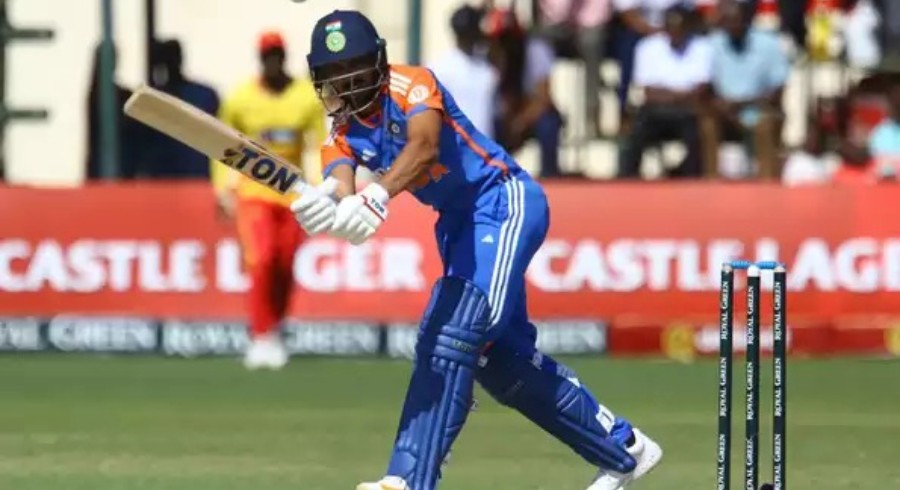 PHOTO: AFP
Ruturaj Gaikwad's journey in cricket has been filled with exciting opportunities recently. A few months ago, he was surprised and honored to be asked to lead the Chennai Super Kings (CSK) in the IPL, stepping into the big shoes of MS Dhoni. Now, during the ongoing series in Zimbabwe, Ruturaj is aiming to secure the No.3 spot in the Indian T20I team, a position left open after Virat Kohli's retirement from the format.
In the second T20I against Zimbabwe, Ruturaj played a crucial role in India's victory and is expected to continue batting at No.3 for the rest of the series.
When asked about his batting position, Ruturaj said, "Wherever the team sends me, I'm happy to bat there. There isn't much of a difference opening the batting or playing at Number 3. You still have to play the new ball. Not much of a difference."
Talking about filling the No.3 spot after Kohli, Ruturaj emphasized that it's important to focus on his own game.
"It's a really big topic, it's not the right point to think about it. To compare to him or to fill in his shoes is really tough. As I had said in the IPL as well, its difficult to fill Mahi bhai's shoes as well. You want to start your own career, you want to play your own game. That's the priority right now, focus on one game, focus on making your team win - for whichever side you play - and make sure you're on the winning side more often than not," he further added.
Ruturaj also mentioned the challenging batting conditions in Zimbabwe. India faced a setback in the first T20I, which they lost.
"It's definitely challenging. It's slightly unique. If you have seam movement coming at you in one pace, you can still negotiate it. But here it's slightly double-paced and the bounce is also slightly variable. That's causing a bit of difference. When the ball is new, it's slightly tougher to score. But once the ball becomes old, with fast outfield and relatively small straight boundaries, you can convert your runs after that," he concluded.



.jpg)
.jpg)
.jpg)